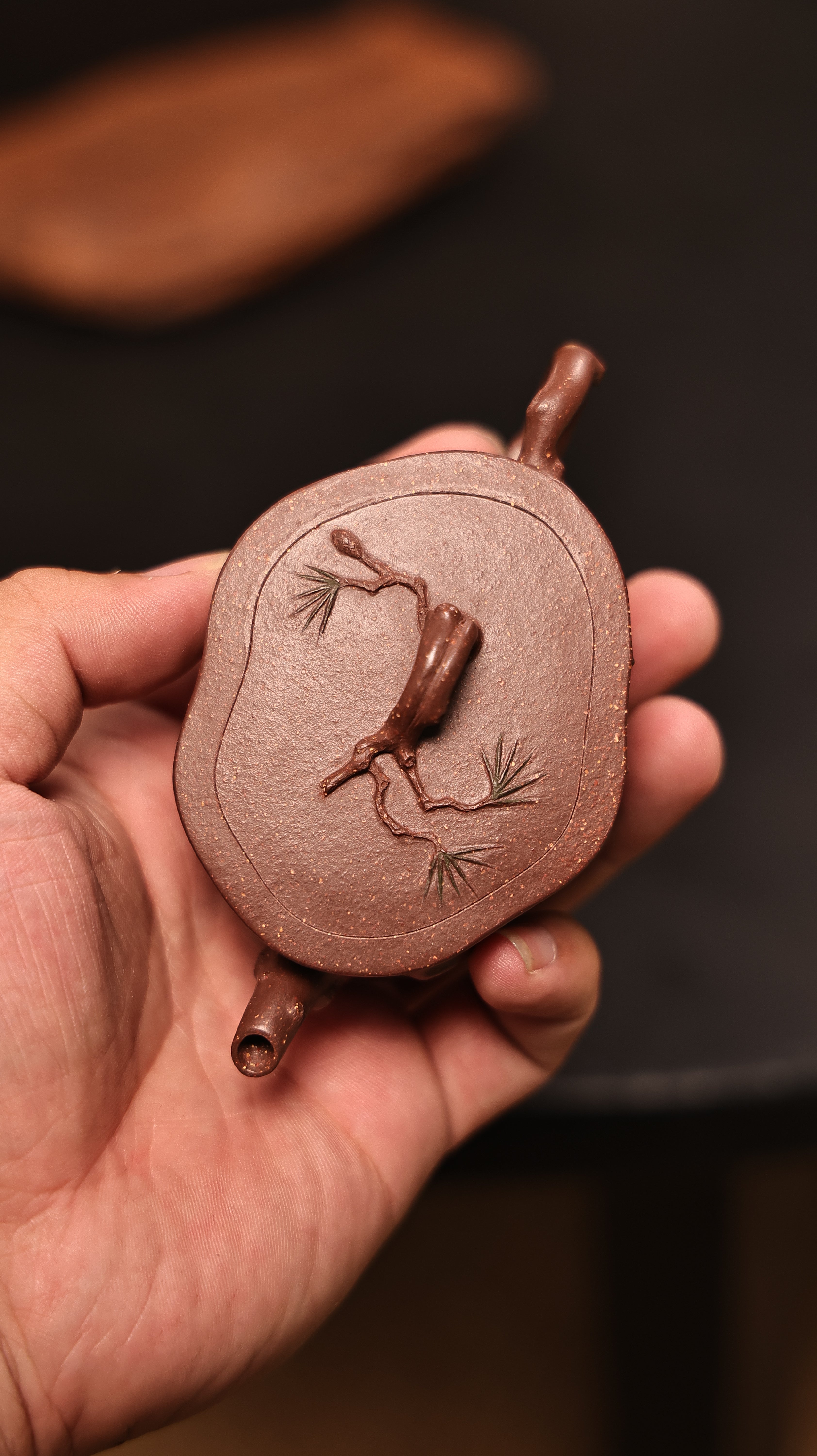
Across age-old chronicles,
Throughout epochs, collectors have been enchanted by the one-of-a-kind charm of Yixing Zisha pots. Originating from the zone of Yixing in the Jiangsu Province, these artifacts are renowned for their distinguished beauty, unusual clay, and fundamental ability to raise the palate of the concoction. The ground's distinctive auburn hue, combined with the proficient manufacture of territorial creators, creates creations that are equally functional crafts and cherished holdings. Collecting a Zisha teapot is more than just an purchase; it's experiencing a rich cultural heritage.
Understanding Yixing Teapots: Saga, Styles, and Price
The notable Yixing teapots stand as a profound legacy deeply intertwined with Chinese culture. Beginning in the Yixing region of Jiangsu province, these clay vessels carry a heritage linking back to the Ming Dynasty. Preceding examples were functional, but amidst centuries, Yixing teapot manufacturing evolved into an esteemed art form. The clay itself, known for its unique texture and ability to refine the flavor of the tea, lasts a defining factor. Yixing teapots manifest in various designs, broadly categorized by shape: Classic such as Zhuni (purple clay) and Bisheng, as well as refined designs. The merit of a Yixing teapot relies on several factors, including the potter’s reputation, the age of the piece, the rarity of the clay, and its aesthetic grace.
- Chronology: Early periods
- Clay: Assorted selections
- Assessment Factors: Historical period
Art of Zisha Pottery: Skill and Creators
This assembly of a real Zisha teapot is a complex process, requiring extensive times of skill. Proficient artisans meticulously extract the finest Zisha clay, a exclusive earth found only in specific regions of China. Time-honored techniques, often relayed through families, involve meticulous shaping, sensitive carving, and steady firing in ancient kilns. The concluding teapot isn't merely a vessel; it's a testament to innovative vision and the deep connection between the creator and their tradition. Each artifact showcases the unique touch of the fabricator, resulting in a truly exceptional work of making.
A Clayware: Discovering the Broad Traditions of the Yixing Locality
Yixing, positioned in Jiangsu the expanse, is internationally renowned for its exceptional cookware – a tangible representation of centuries of Chinese art. These aren't merely vessels for Chinese Teapot making tea; they are intricate works of creativity, often reflecting philosophical ideals. This unique purple clay, known as Zisha, possesses singular qualities: it dense, open to air, and imparts a subtle nuance to the tea.
- Many clans have honed the techniques of Yixing urn making, passing down exclusive methods through ages.
- Connoisseurs prize these pieces for their attractiveness and rareness.
- Some object tells a account, connecting the partaker to a rich legacy.
The fabrication process, from acquiring the clay to the final application, is a complex and laborious endeavor, resulting in cherished treasures.
Engaging in Yixing Zisha: Vital Indicators
When exploring buying Yixing Zisha ceramics, diverse components demand careful scrutiny. Initially, the soil's tint is key; authentic Zisha conventionally exhibits a pronounced reddish-brown shading. Moreover, assess the technique; distinct aspects and a sleek coating reveal accomplished production. To finish, examine the artisan's credentials; well-known names obtain superior rates and often deliver a stronger return.
Zisha Pot Techniques for Tea Brewing
Infusing savory tea with a Zisha urn is more above a simple method; it's an craft. Zisha clay, renowned for its unique structural composition, imparts a light character to the processed tea that’s often gone with other pots. The proper water temperature is fundamental; typically, reduced than what's used for black tea, to keep the tea's scent and flavor. Consider scrupulously the tea kind; delicate green teas or aged pu-erhs gain from the Zisha’s ability to mellow their basic edge. It’s pivotal to heat the teapot ahead of brewing, and to avoid over-steeping. Mastering this procedure leads to a veritably exceptional tea enjoyment.
- Recognizing Zisha Clay
- Heat Intensity & Tea Selection
- Value of Warming Up
Caring for Your Famous Pot
In order to preserve the durability of your precious Yixing earthenware, careful protection is essentially necessary. Eschew using soapsuds; instead, gently spray it with hot H2O. Prevent immediate changes; refrain lay the teapot directly onto a searing surface. Periodically, enhance the teapot by soaking it with high-quality fermented tea, as this supports to develop its essence and guards the inimitable essentials of the earth.
With respect to Clay to Goblet: The Progression of a Yixing Utensil
This creation of a Zisha teapot is a remarkable approach, a proof to both the earth's bounty and the competence of the craftsman. It opens with the precise extraction of the extraordinary clay from the reddish Zisha mines neighboring Yixing. This raw material, known for its extraordinary properties, is then patiently washed and molded for the early forming. The teapot's contour is artfully formed using a mix of classical sculpting practices, often incorporating complex motifs. Following ripening, the jug undergoes a critical first firing, succeeded by a finishing stage, which might involve several different layers of unprocessed Zisha films. Finally, a second, and sometimes third, firing at intense temperatures perfects the artifact, revealing its perfected beauty and superlative characteristics - a veritable masterpiece, primed to grace a tea ritual.
{Yixing Teapots: A Embodiment of the Civilization and Recognition
Famed Yixing teapots, originating from the acclaimed Yixing region of Jiangsu province, are far more than mere jars for brewing infusions; they represent a profound aspect of Chinese culture. Crafted from distinctive purple clay – zisha – these unique teapots are highly prized for their ability to enhance the flavor of the tea and, crucially, for their aesthetic appeal. The legacy of Yixing teapot making spans centuries, and the skill involved is passed down through generations, making each teapot a work of art that embodies time-honored techniques and a profound appreciation for the simple pleasures in life.
Comments on “Why does a handmade Purple Clay Teapot resonate with sustainability-minded buyers?”